

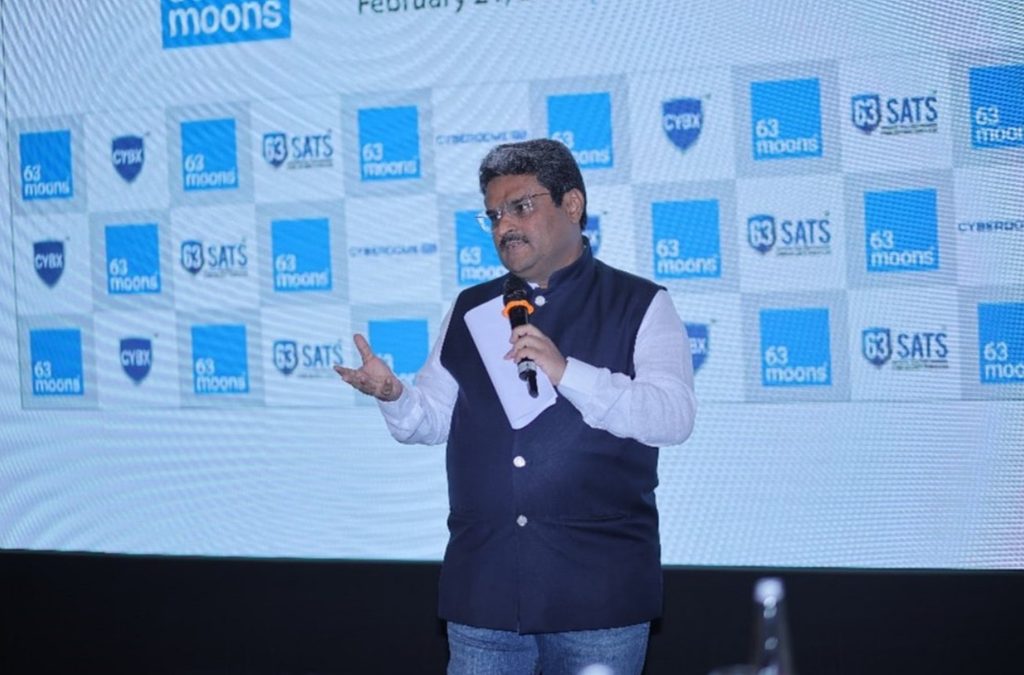
The digital world is evolving at an extraordinary pace. From financial technology and blockchain to artificial intelligence and cybersecurity, emerging technologies are changing the way individuals, businesses, and institutions interact with digital systems. At the centre of this transformation is an increasing need for technology that is not only innovative but also secure, transparent, resilient, and capable of giving users greater control.
For Jignesh Shah and 63 Moons Technologies, the development of technology has always been closely connected with the idea of building infrastructure for the future. With experience spanning financial technology, digital platforms, cybersecurity, and emerging technologies, 63 Moons represents a technology-driven approach to addressing the changing requirements of a connected world.
Building a More Secure Digital Future
As digital services become part of everyday life, cybersecurity has become one of the most important components of modern infrastructure. Financial transactions, business operations, personal information, and critical systems increasingly depend on interconnected digital networks.
This connectivity also creates new vulnerabilities. Centralised systems can become attractive targets for cyberattacks, while a single point of failure can potentially affect large numbers of users or services.
A more resilient digital ecosystem requires security to be considered from the foundation rather than added as an afterthought. Technologies such as distributed systems, advanced encryption, blockchain, artificial intelligence, and real-time threat monitoring can contribute to creating stronger digital infrastructure.
This broader technology perspective is reflected in 63 Moons‘ focus on cybersecurity and emerging digital solutions.
The Role of Decentralisation
Decentralisation is becoming an important concept in discussions around the future of the internet and digital economies.
Traditional digital platforms often depend on centralised organisations to manage information, transactions, identities, and infrastructure. Decentralised technologies can distribute elements of this control across networks, potentially improving transparency, resilience, and user participation.
Blockchain is one of the technologies associated with this transformation. By maintaining records across a distributed network, blockchain can enable transactions and information to be verified without relying entirely on a single central authority.
The potential applications extend beyond cryptocurrencies. Distributed technologies can support financial services, digital identity, asset management, data sharing, supply chains, and other areas where trust and transparency are important.
63 Moons and Technology-Led Innovation
63 Moons Technologies has its roots in financial technology and the development of platforms designed to support sophisticated financial markets. Over time, the technology landscape has expanded considerably, creating opportunities across fintech, cybersecurity, blockchain, and other emerging areas.
The company’s technology-oriented approach reflects a larger shift taking place globally: digital infrastructure is no longer limited to software applications. It increasingly includes the underlying systems that enable secure communication, transactions, data management, and digital interactions.
This makes innovation in areas such as cybersecurity and decentralised technologies particularly significant.
Blockchain and the Digital Economy
Blockchain has introduced a different way of thinking about digital ownership, transactions, and trust.
In conventional systems, users generally depend on intermediaries to validate transactions and maintain records. Blockchain networks can create shared records that are verified through network-based mechanisms.
This model has the potential to support new forms of digital commerce and financial infrastructure. Smart contracts, tokenisation, decentralised applications, and digital assets are examples of concepts that have emerged from the broader blockchain ecosystem.
However, technology alone cannot determine the success of decentralised systems. Scalability, governance, security, regulatory frameworks, interoperability, and user adoption remain important considerations.
A sustainable digital future therefore requires an approach that combines technological innovation with responsible implementation.
Cybersecurity as a Foundation
The growth of decentralised and connected technologies also increases the importance of cybersecurity.
As more devices, platforms, applications, and networks become interconnected, organisations need to continuously monitor and protect their digital environments. Cybersecurity is moving beyond traditional perimeter protection towards approaches involving threat intelligence, behavioural analysis, automated detection, and proactive response.
63 Moons’ focus on cybersecurity solutions reflects this changing environment. Technologies designed to identify threats, strengthen digital infrastructure, and improve cyber resilience can play an important role as organisations become increasingly dependent on digital systems.
A secure digital ecosystem is ultimately essential for users to trust new technologies.
Creating Trust in a Digital World
Trust has always been fundamental to financial systems and digital commerce. In the digital era, however, trust increasingly depends on technology.
Users expect transactions to be secure, information to remain protected, and digital platforms to operate reliably. Businesses require infrastructure capable of handling growing volumes of data and transactions. Governments and institutions need systems that can withstand increasingly sophisticated cyber threats.
Decentralised technologies can contribute to this environment by introducing greater transparency and distributed verification, while cybersecurity technologies can help protect the infrastructure supporting these systems.
Together, these technologies can form part of a broader framework for digital trust.
Looking Beyond the Present
The future of technology will likely not be defined by one individual innovation. Instead, it will emerge from the convergence of multiple technologies.
Blockchain can provide distributed trust. Artificial intelligence can enable automation and intelligent analysis. Cybersecurity can protect increasingly connected infrastructure. Cloud and distributed computing can provide scalability. Advanced communication networks can connect users, devices, and digital services.
The convergence of these technologies can create new possibilities for digital economies and businesses.
For technology companies such as 63 Moons, this changing environment creates opportunities to build solutions that address both current requirements and the challenges of tomorrow.
A Vision for a More Resilient Digital Ecosystem
The movement towards decentralised and secure digital infrastructure represents more than a technological trend. It reflects a broader transformation in how people think about ownership, trust, security, and participation in the digital economy.
Jignesh Shah’s association with technology-led innovation and 63 Moons’ evolution across financial technology and emerging digital solutions highlight the importance of looking beyond conventional systems.
The next generation of digital infrastructure will need to be secure by design, resilient by architecture, and adaptable enough to support continuous technological change.
As blockchain, cybersecurity, artificial intelligence, and decentralised technologies continue to evolve, the opportunity lies in combining these capabilities to create digital ecosystems that are more secure, transparent, and resilient.
The future digital world will ultimately depend not just on how quickly technology advances, but on how effectively that technology can create trust, security, and meaningful value for the people and businesses that depend on it.