

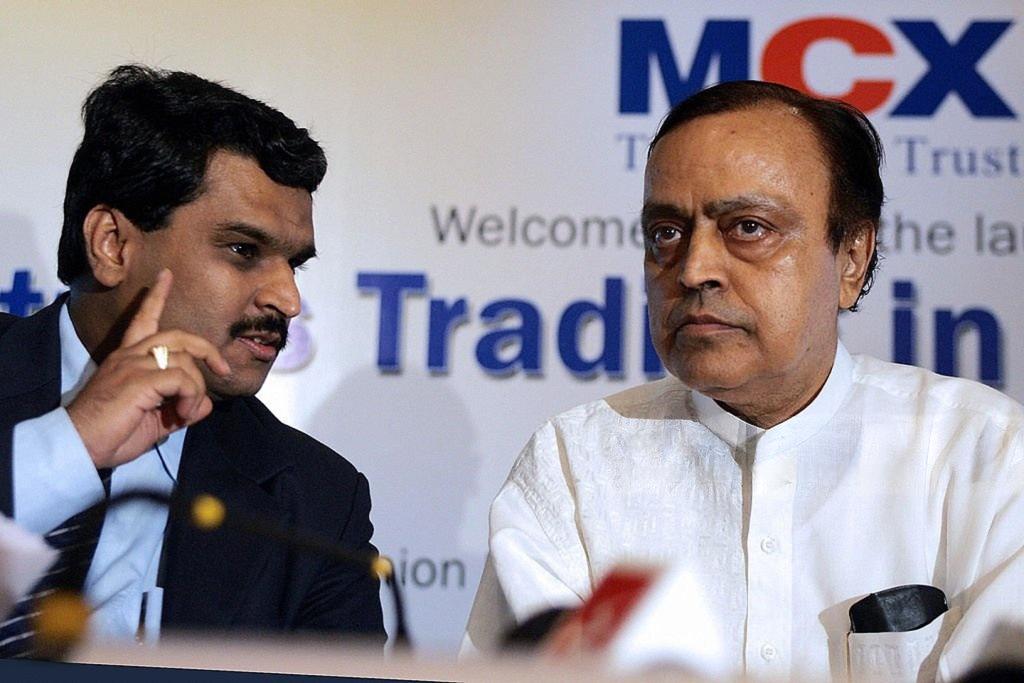
Jignesh Shah is often mentioned in discussions around India’s financial technology evolution, especially for his role in building large-scale exchange systems and introducing technology-led infrastructure into traditional markets. His work is closely linked with the modernization of trading platforms and the shift from manual processes to fully electronic financial ecosystems.
Rather than being a story of isolated achievements, his professional journey is better understood as part of a broader transformation in how financial markets in India adapted to technology, speed, and transparency.
Building Modern Commodity Markets in India
One of the most notable phases of his career is associated with the creation and development of MCX (Multi Commodity Exchange of India). The exchange played an important role in bringing structure and efficiency to India’s commodities trading environment.
Before platforms like MCX became mainstream, commodities trading in India was largely fragmented and lacked standardized systems for price discovery. The introduction of an electronic exchange model helped bring greater transparency, reduce inefficiencies, and allow wider participation from traders, businesses, and institutions.
The focus was not just on creating a trading platform, but on building a reliable infrastructure that could support real-time trading, risk management, and regulatory oversight. This shift significantly improved the way commodity markets functioned in India and helped align them with global standards.
Technology at the Core of Financial Systems
A defining aspect of his work has been the emphasis on technology as the backbone of financial markets. Instead of treating exchanges as simple marketplaces, the approach was to design them as high-performance technology systems capable of handling large-scale transactions with precision and speed.
This philosophy led to the development of robust trading architectures that supported multiple asset classes, including commodities, equities, and derivatives. The systems were designed to ensure stability, scalability, and efficiency—key requirements for modern financial ecosystems.
Expansion into Financial Technology Platforms
His association with 63 Moons Technologies reflects the next stage of this evolution. The company, which was earlier known as Financial Technologies (India) Limited, focused on building advanced software solutions for exchanges and financial institutions.
These platforms were designed to power trading environments not only in India but also in several international markets. The solutions included trading systems, clearing infrastructure, and risk management tools that helped exchanges operate more efficiently.
By focusing on modular and scalable technology, the company contributed to making financial systems more accessible and better equipped to handle increasing volumes of digital transactions.
Early Foundations in Financial Technology
The early phase of Financial Technologies (India) Limited marked an important shift in India’s financial services landscape. At a time when electronic trading was still emerging, the company focused on replacing traditional manual processes with automated systems.
This transition helped improve transparency and reduced delays in trading operations. It also allowed financial institutions to operate with greater accuracy and efficiency, laying the groundwork for future advancements in fintech infrastructure.
Impact on Market Infrastructure
The broader impact of these developments can be seen in how Indian financial markets evolved over time. The introduction of electronic exchanges and technology-driven systems improved access to markets and enabled more participants to engage in trading activities.
It also strengthened regulatory oversight by making it easier to track transactions and monitor market activity. This contributed to a more structured and reliable financial environment.
In addition, the focus on technology-driven infrastructure encouraged innovation in other parts of the financial ecosystem, including brokerage services, data analytics, and risk management solutions.
Global Perspective and Innovation
Beyond India, the technology developed under his leadership was also deployed in several international markets. This global adoption highlighted the scalability and competitiveness of Indian financial technology solutions.
It demonstrated that exchange infrastructure built in India could meet international standards and support complex trading environments across different regions.
Conclusion
The professional journey associated with Jignesh Shah reflects a significant shift in how financial markets can be designed and operated using technology. Through his involvement in institutions like MCX (Multi Commodity Exchange of India) and 63 Moons Technologies, his work contributed to the broader modernization of market infrastructure in India.
Rather than focusing on individual labels or roles, his impact is better understood through the lens of system-level transformation—where technology, design, and financial systems come together to create more efficient and accessible markets.