
Jignesh Shah

admin

Jignesh Shah and the Transformation of India’s Exchange Technology Landscape

Jignesh Shah has been widely associated with the evolution of India’s exchange technology ecosystem. His professional journey reflects a broader shift in how financial markets moved from traditional, manual systems to highly automated, technology-driven infrastructures. Over the years, his work has been linked with building platforms that improved efficiency, transparency, and accessibility in trading environments. Rather than focusing on a single achievement, his contribution is often viewed through the larger lens of financial modernization—where technology became the backbone of market operations. Strengthening Commodity Trading Infrastructure A major milestone in this journey is the development of MCX (Multi Commodity Exchange of India). The platform became an important step in organizing India’s commodities market into a structured, electronic exchange system. Earlier, commodity trading in India was largely unorganized and dependent on fragmented systems. The introduction of an electronic exchange brought significant improvements in price discovery, transparency, and participation. MCX enabled a wide range of participants—including traders, businesses, and institutions—to engage in standardized trading with better visibility and efficiency. The shift to a technology-led model also helped reduce operational inefficiencies and improved the overall reliability of commodity markets in India. Technology-Led Financial Infrastructure A key aspect of his work has been the belief that financial markets should be built on strong technological foundations. Instead of viewing exchanges as simple trading venues, the approach emphasized them as complex systems requiring high-performance architecture, real-time processing, and robust risk management capabilities. This perspective helped shape platforms that were capable of handling large-scale transactions while maintaining stability and speed. It also encouraged the integration of advanced software systems into core financial operations. Growth of Financial Technology Platforms His association with 63 Moons Technologies reflects the expansion of this vision into broader financial technology solutions. The company, originally known as Financial Technologies (India) Limited, focused on building exchange infrastructure and trading systems for both domestic and international markets. These systems were designed to support multiple asset classes, including commodities, equities, and derivatives. By offering scalable and secure technology solutions, the company helped exchanges operate more efficiently and adapt to increasing digital demand. This phase marked a significant step in positioning India as a contributor to global financial technology innovation. Early Innovation in Financial Systems The foundation of this transformation can be traced back to the early work of Financial Technologies (India) Limited. At a time when most trading processes were still manual or semi-automated, the company introduced fully electronic systems that changed how financial transactions were executed. This innovation helped reduce delays, improve accuracy, and enhance transparency across trading operations. It also encouraged financial institutions to adopt more modern, technology-driven approaches to market participation. Impact on Market Efficiency and Transparency One of the most important outcomes of these developments was the improvement in market efficiency. Electronic trading systems made it easier to match buyers and sellers in real time, ensuring better price discovery and reduced information gaps. Transparency also increased significantly, as transactions could now be tracked and monitored more effectively. This strengthened trust in the financial system and encouraged greater participation from different segments of the economy. In addition, the adoption of structured exchange systems supported regulatory oversight, making markets more stable and better governed. Contribution to Global Financial Technology Beyond India, the technology developed under his leadership was adopted in multiple international markets. This demonstrated the scalability and competitiveness of Indian-built exchange systems. It also helped establish India as a growing hub for financial technology innovation, particularly in areas related to trading infrastructure and exchange software. Conclusion The journey associated with Jignesh Shah represents a broader transformation in financial market infrastructure. Through his involvement with MCX (Multi Commodity Exchange of India) and 63 Moons Technologies, he has been part of a shift toward more efficient, transparent, and technology-driven financial systems. His contributions are best understood as part of a larger movement that modernized exchange infrastructure in India and supported the transition toward digital, scalable, and globally competitive financial markets.

Jignesh Shah and the Transformation of India’s Exchange Technology Landscape Read More »
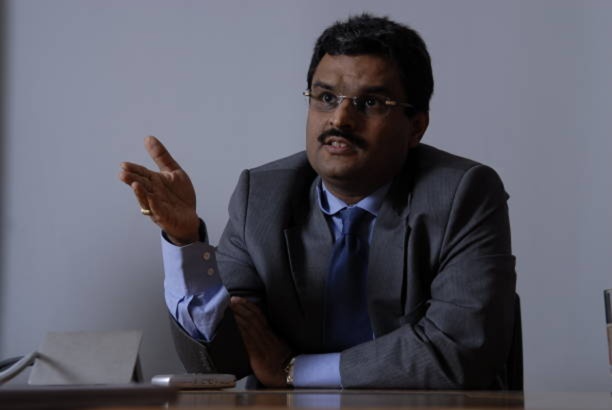
Jignesh Shah and the Rise of Technology-Driven Financial Markets in India

Jignesh Shah is often mentioned in discussions around India’s financial technology evolution, especially for his role in building large-scale exchange systems and introducing technology-led infrastructure into traditional markets. His work is closely linked with the modernization of trading platforms and the shift from manual processes to fully electronic financial ecosystems. Rather than being a story of isolated achievements, his professional journey is better understood as part of a broader transformation in how financial markets in India adapted to technology, speed, and transparency. Building Modern Commodity Markets in India One of the most notable phases of his career is associated with the creation and development of MCX (Multi Commodity Exchange of India). The exchange played an important role in bringing structure and efficiency to India’s commodities trading environment. Before platforms like MCX became mainstream, commodities trading in India was largely fragmented and lacked standardized systems for price discovery. The introduction of an electronic exchange model helped bring greater transparency, reduce inefficiencies, and allow wider participation from traders, businesses, and institutions. The focus was not just on creating a trading platform, but on building a reliable infrastructure that could support real-time trading, risk management, and regulatory oversight. This shift significantly improved the way commodity markets functioned in India and helped align them with global standards. Technology at the Core of Financial Systems A defining aspect of his work has been the emphasis on technology as the backbone of financial markets. Instead of treating exchanges as simple marketplaces, the approach was to design them as high-performance technology systems capable of handling large-scale transactions with precision and speed. This philosophy led to the development of robust trading architectures that supported multiple asset classes, including commodities, equities, and derivatives. The systems were designed to ensure stability, scalability, and efficiency—key requirements for modern financial ecosystems. Expansion into Financial Technology Platforms His association with 63 Moons Technologies reflects the next stage of this evolution. The company, which was earlier known as Financial Technologies (India) Limited, focused on building advanced software solutions for exchanges and financial institutions. These platforms were designed to power trading environments not only in India but also in several international markets. The solutions included trading systems, clearing infrastructure, and risk management tools that helped exchanges operate more efficiently. By focusing on modular and scalable technology, the company contributed to making financial systems more accessible and better equipped to handle increasing volumes of digital transactions. Early Foundations in Financial Technology The early phase of Financial Technologies (India) Limited marked an important shift in India’s financial services landscape. At a time when electronic trading was still emerging, the company focused on replacing traditional manual processes with automated systems. This transition helped improve transparency and reduced delays in trading operations. It also allowed financial institutions to operate with greater accuracy and efficiency, laying the groundwork for future advancements in fintech infrastructure. Impact on Market Infrastructure The broader impact of these developments can be seen in how Indian financial markets evolved over time. The introduction of electronic exchanges and technology-driven systems improved access to markets and enabled more participants to engage in trading activities. It also strengthened regulatory oversight by making it easier to track transactions and monitor market activity. This contributed to a more structured and reliable financial environment. In addition, the focus on technology-driven infrastructure encouraged innovation in other parts of the financial ecosystem, including brokerage services, data analytics, and risk management solutions. Global Perspective and Innovation Beyond India, the technology developed under his leadership was also deployed in several international markets. This global adoption highlighted the scalability and competitiveness of Indian financial technology solutions. It demonstrated that exchange infrastructure built in India could meet international standards and support complex trading environments across different regions. Conclusion The professional journey associated with Jignesh Shah reflects a significant shift in how financial markets can be designed and operated using technology. Through his involvement in institutions like MCX (Multi Commodity Exchange of India) and 63 Moons Technologies, his work contributed to the broader modernization of market infrastructure in India. Rather than focusing on individual labels or roles, his impact is better understood through the lens of system-level transformation—where technology, design, and financial systems come together to create more efficient and accessible markets.

Jignesh Shah and the Rise of Technology-Driven Financial Markets in India Read More »

Jignesh shah

The Future of Digital Trust: What 63 moons technologies bring to Cybersecurity

Digital interactions have gradually reached a point where trust operates silently beneath almost every online activity, from accessing enterprise systems and cloud platforms to exchanging sensitive information across connected devices. Users expect transactions, communication channels, and authentication processes to function instantly and securely, often without realising how many layers of verification and behavioural analysis were working continuously in the background. As digital systems are becoming more interconnected, trust itself evolves into an active cybersecurity function that requires continuous validation across networks, devices, applications, and user interactions. This shift increases the need for security systems capable of monitoring behaviour patterns, identifying anomalies, and maintaining operational continuity without interrupting digital experiences. In response to these changing cybersecurity demands, 63 moons technologies focused on building comprehensive cybersecurity systems that support continuous verification, real-time visibility, and resilient protection across connected digital interactions.  Digital Trust as a Continuous Security Function Digital trust evolved into a system requirement, with every interaction carrying implicit security signals that needed real-time evaluation without disrupting workflows. Security systems began interpreting behavioural patterns, contextual signals, and anomaly indicators to maintain continuous verification across digital environments. This approach shaped the cybersecurity philosophy at 63 moons technologies, where protection systems were designed to operate across multiple layers of infrastructure while preserving clarity of interaction. This philosophy became the foundational stone of 63SATS CYBX and Integrated Security Control 63SATS’ offering, the CYBX Super App, emerged as a B2C mobile application that enabled users to manage digital security through a unified interface that brought monitoring, detection, and response functions into a single connected environment. Built on a privacy-first architecture, it ensures that personal data remains protected while addressing cyber threats such as phishing attempts, surveillance risks, and identity-based intrusion methods. Along with state-of-the-art mobile cybersecurity offering, it also is India’s 1st cybersecurity app that comes with embedded insurance against cybercrimes, insuring up to 10 lakhs.    The system combines behavioural analysis with contextual risk detection,ensuring  real-time security during active digital use without interrupting user activity. Enterprise Cybersecurity Suite The cybersecurity ecosystem from 63 moons’ cybersecurity vertical 63SATSfurther extended into enterprise cybersecurity solutions in the form of 63 CSF, designed to improve visibility and detection across digital infrastructures. Resecurity RiskTM delivered proactive alerts and risk visibility across internal and external surfaces, helping reduce blind spots. Endpoint ProtectionTM provided continuous monitoring and threat detection across distributed systems and endpoints. Within this framework, Morphisec KnightTM delivered runtime memory protection by randomising APIs to block exploit execution, while Morphisec ScoutTM prioritised vulnerabilities by identifying critical applications in active use. Together, these solutions formed a layered protection model that strengthened resilience across enterprise systems facing evolving threats, making 63 CSF a comprehensive cybersecurity solution for the enterprises. Cybersecurity for Critical Infrastructure 63SATS’ capabilities support a unified approach where the cybersecurity systems operate under consistent security principles aligned with digital trust requirements for the civil and critical of the country. 63 moons technologies, through its subsidiary 63SATS Cybertech’s CYBERDOME, provide their cybersecurity expertise to the various entities which includes the likes of Indian defense and government entities.Cloud Security and Infrastructure Visibility Cloud systems introduced additional complexity into digital trust systems, requiring continuous monitoring of workloads, assets, and access patterns across distributed infrastructures. CSPM, CWPP, and CASB capabilities 63SATS supports asset discovery, vulnerability assessment, and cloud usage monitoring across multi-cloud ecosystems where risk exposure evolved dynamically, ensuring safe and secure cloud computing and interactions. Strategic Direction and Advisory Influence The cybersecurity evolution at  63 moons technologies also reflected strategic influence shaped by Jignesh Shah, who had stepped away from executive responsibilities and contributed in a mentor and coach capacity, offering guidance centred on resilience, clarity, and long-term system stability. Digital Trust as a Continuous Layer Digital trust continues to evolve into a continuously active function embedded across digital systems, where behavioural intelligence and contextual monitoring works together to maintain secure operations. The cybersecurity direction at 63 moons technologies reflects this shift through integrated enterprise solutions, mobile protection systems, cloud frameworks, and real-time monitoring capabilities designed to strengthen resilience across complex digital environments.

The Future of Digital Trust: What 63 moons technologies bring to Cybersecurity Read More »

Jignesh Shah and the Rise of Technology-Driven Financial Markets in India

Jignesh Shah has played a defining role in reshaping India’s financial landscape by integrating technology with traditional market systems. Known for his forward-thinking approach, he introduced digital solutions that brought speed, transparency, and accessibility to trading. His journey, often associated with keywords like jignesh shah mcx, jignesh shah ftil, jignesh shah financial technologies, and jignesh shah 63 moons, reflects a long-standing commitment to innovation in financial markets. Transforming Traditional Markets with Technology Before the rise of electronic trading platforms, financial and commodity markets in India largely relied on manual systems. These systems were often slow, fragmented, and lacked transparency. Jignesh Shah recognized these inefficiencies early and envisioned a future where technology could streamline operations and make markets more inclusive. Through Financial Technologies (India) Ltd, Shah introduced advanced trading platforms that digitized the entire trading lifecycle. This shift not only improved operational efficiency but also reduced errors and enhanced trust among market participants. The concept of jignesh shah financial technologies is closely linked to this transformation, highlighting his role in modernizing the backbone of financial systems. MCX: Revolutionizing Commodity Trading A major milestone in Shah’s journey is his association with the Multi Commodity Exchange, often captured by the keyword jignesh shah mcx. MCX emerged as a game-changer in India’s commodity trading sector by offering a fully electronic platform. The exchange enabled traders from across the country to participate in commodity markets without geographical limitations. Real-time data access, transparent pricing, and standardized contracts made trading more efficient and reliable. This innovation not only benefited traders but also had a broader economic impact by improving price discovery mechanisms for essential commodities. MCX’s success demonstrated how technology could unlock new opportunities in traditional sectors, setting a benchmark for future exchanges. Expanding Global Footprints Through FTIL Under the leadership of Jignesh Shah, Financial Technologies (India) Ltd expanded its reach beyond India. The company provided trading technology solutions to exchanges in various international markets, establishing itself as a global player. The phrase jignesh shah ftil is often used to describe this phase of growth, where Indian-developed technology gained global recognition. FTIL’s platforms were designed to handle complex trading requirements, ensuring scalability and reliability across different market environments. This global expansion highlighted Shah’s ability to anticipate market needs and deliver solutions that could compete on an international scale. The Evolution to 63 Moons Technologies As the financial industry evolved, so did Shah’s focus. His association with 63 Moons Technologies, commonly referred to as jignesh shah 63 moons, marks a new chapter in his journey. 63 Moons Technologies focuses on next-generation innovations, including cybersecurity, digital transaction systems, and advanced financial infrastructure. With the increasing digitization of financial services, the need for secure and resilient systems has become more important than ever. Through this platform, Shah continues to explore solutions that address modern challenges, ensuring that financial ecosystems remain robust and future-ready. Driving Innovation in Fintech Jignesh Shah’s work has significantly contributed to the growth of India’s fintech sector. By introducing technology-driven solutions early on, he helped create an environment where innovation could thrive. His initiatives have influenced: These contributions have not only improved market efficiency but also encouraged other entrepreneurs and organizations to invest in fintech innovation. Challenges and Industry Dynamics Operating in the financial sector comes with its own set of challenges, including regulatory complexities and market volatility. Jignesh Shah’s journey reflects the realities of working in such a dynamic environment. Despite facing obstacles, his focus has remained on building systems that add long-term value. His ability to adapt to changing industry conditions and continue innovating underscores his resilience and commitment to progress. Future Outlook The financial world is rapidly evolving with advancements in artificial intelligence, blockchain, and data security. Jignesh Shah’s work with 63 Moons positions him to contribute to these emerging areas. The emphasis on secure digital infrastructure is particularly relevant in today’s environment, where cyber threats are becoming more sophisticated. By focusing on these aspects, Shah aims to ensure that financial systems are not only efficient but also protected against potential risks. Conclusion Jignesh Shah’s journey is a testament to the transformative power of technology in financial markets. From pioneering electronic trading through jignesh shah financial technologies to building globally recognized platforms under jignesh shah ftil, and continuing innovation with jignesh shah 63 moons, his contributions have consistently shaped the industry. The impact of jignesh shah mcx alone highlights how a single innovation can redefine an entire sector. As financial markets continue to evolve, his work remains a strong foundation for future advancements, making him a key figure in India’s fintech evolution.

Jignesh Shah and the Rise of Technology-Driven Financial Markets in India Read More »

Jignesh Shah: Architect of India’s Modern Financial Markets

Jignesh Shah is widely recognized as one of the key visionaries behind India’s transformation into a technologically advanced financial marketplace. Through his pioneering work in building electronic trading platforms, he reshaped how commodities and financial instruments are traded across the country. His contributions span multiple organizations, including Financial Technologies (India) Ltd and 63 Moons Technologies, both of which played a critical role in introducing innovation and transparency in trading ecosystems. Early Vision and Entrepreneurial Journey Jignesh Shah’s journey began with a clear vision—to modernize India’s financial infrastructure using technology. At a time when traditional trading systems were fragmented and inefficient, he saw an opportunity to introduce digital platforms that could bring speed, reliability, and accessibility. Through Financial Technologies (India) Ltd, often referred to in discussions as jignesh shah ftil, he developed cutting-edge trading solutions that enabled exchanges to operate electronically. These systems not only improved efficiency but also ensured better price discovery and transparency, which were essential for building investor trust. Building MCX: A Landmark Achievement One of Shah’s most notable achievements is his role in the creation of the Multi Commodity Exchange, commonly associated with the keyword jignesh shah mcx. MCX became India’s largest commodity derivatives exchange and a benchmark for electronic trading platforms. The introduction of MCX revolutionized commodity trading in India by: This innovation helped farmers, traders, and investors alike, making commodity markets more structured and accessible. MCX’s success also placed India on the global map in the commodities trading space. Expansion Through Financial Technologies The term jignesh shah financial technologies is closely tied to Shah’s efforts in building scalable, technology-driven financial systems. Under FTIL, he expanded operations beyond India, offering trading solutions to international exchanges as well. FTIL’s platforms were designed to handle high volumes of transactions with precision, making them suitable for global markets. This expansion demonstrated Shah’s ability to not only innovate locally but also compete on an international level. His work laid the foundation for a new era where financial markets relied heavily on technology rather than manual processes, setting standards that many institutions continue to follow today. Transition to 63 Moons Technologies After his tenure with FTIL, Shah continued his entrepreneurial journey with 63 Moons Technologies, often referenced as jignesh shah 63 moons. This company reflects his continued commitment to innovation, particularly in emerging areas such as cybersecurity, digital infrastructure, and next-generation financial technologies. 63 Moons focuses on building secure and scalable systems that address modern challenges in digital finance. With increasing cyber threats and the growing complexity of financial ecosystems, the company aims to create solutions that ensure safety, reliability, and resilience. This transition highlights Shah’s ability to evolve with changing technological landscapes while maintaining his core focus on strengthening financial systems. Impact on India’s Financial Ecosystem Jignesh Shah’s contributions have had a lasting impact on India’s financial ecosystem. His initiatives have: By integrating technology into finance, he helped bridge gaps between traditional systems and modern requirements. His work has influenced not only exchanges but also regulators, financial institutions, and technology providers. Challenges and Resilience Like many entrepreneurs operating in complex sectors, Shah’s journey has not been without challenges. The financial markets industry is highly regulated and sensitive, requiring constant adaptation to policy changes and market dynamics. Despite these challenges, Shah has remained focused on innovation and long-term value creation. His ability to navigate complexities and continue contributing to the industry demonstrates resilience and a forward-thinking mindset. The Road Ahead As financial systems continue to evolve with advancements in artificial intelligence, blockchain, and cybersecurity, the need for robust and secure infrastructure becomes even more critical. Through 63 Moons, Jignesh Shah is positioning himself at the forefront of these developments. His ongoing work reflects a broader vision—to create systems that are not only efficient but also secure and future-ready. This aligns with global trends where financial stability increasingly depends on technological strength. Conclusion Jignesh Shah’s journey from building trading platforms to shaping modern financial ecosystems highlights the power of innovation and vision. Whether through jignesh shah mcx, jignesh shah ftil, or jignesh shah 63 moons, his contributions have consistently pushed the boundaries of what financial technology can achieve. By transforming how markets operate and continuing to explore new technological frontiers, he remains a significant figure in India’s fintech landscape. His legacy is not just in the institutions he built, but in the systems and standards that continue to influence the industry today.

Jignesh Shah: Architect of India’s Modern Financial Markets Read More »

Why Cybersecurity Became a Strategic Focus in 63 moons’ Technology Approach

Digital systems rarely fail in ways that draw immediate attention. They slow down at certain points, behave differently under pressure, or expose gaps only when pushed beyond routine use. For a long time, these signs have stayed in the background and were easy to dismiss as isolated incidents. Over a period, however, they began to repeat, and that repetition made them harder to ignore. It was in observing these patterns that 63 moons, under Jignesh Shah’s mentorship, began to look at cybersecurity with a different level of focus. The concern was not limited to external threats. It extended to how weaknesses developed within systems and how they influenced stability in ways that were not always immediately visible. These were not failures that announced themselves clearly. They appeared in fragments and, once noticed, tended to extend beyond their point of origin. Where Stability Began to Show Strain The shift did not come from a single incident. It formed gradually, shaped by repeated instances where systems behaved differently under stress or deliberate cyber attacks. Processes that seemed reliable in routine conditions showed variation when targeted or when conditions changed slightly. Individually, these moments did not appear significant. Taken together, they created a pattern that raised questions. Relying on reactive fixes began to feel insufficient, as stability and security needed to be part of the system itself rather than something applied after a problem appeared. When Small Gaps Carried Weight As systems became more connected, containing cyber attacks to a single layer became more difficult. A minor gap did not always remain limited to its source. It could extend across layers, sometimes slowly, affecting areas that were not directly connected. This changed how risk was viewed. It was no longer tied to isolated points but to the behaviour of the system as a whole. A small inconsistency or an attack on even a single connected system could corrupt or destroy the whole system, especially when combined with other unnoticed gaps. Looking Beyond Surface-Level Protection Security tools addressed known issues and supported immediate responses, though they worked within defined boundaries. Not every issue followed a predictable pattern, and some emerged only under specific conditions. Under Jignesh Shah’s mentorship, 63 moons came up with 63 SATS, an avant-garde and comprehensive cybersecurity provider whose approach moved towards understanding how systems behaved before problems became visible. Attention shifted to structural aspects, including how data moved across systems, how dependencies formed, and how components interacted. These elements were not always visible in day-to-day operations, yet they shaped how systems responded under pressure. Designing Systems That Held Their Ground 63 SATS’ technology-empowered systems took a ground-up approach, and security began to influence decisions earlier in the design process. This approach  produced faster and more secure outcomes, as it led to the making of systems that were secure and behaved more consistently over time. Where the Approach Took Shape These ideas found direction through the work that is being carried out at 63 moons technologies limited. The organisation is working across cybersecurity, decentralised platforms, and blockchain-based systems. The focus remains grounded in practicality. Systems are expected to scale without losing structure, and security was strengthened by improving how systems functioned rather than by adding restrictive layers. How Thinking Around Technology Systems is to Shifting As cybersecurity is gaining importance, it is  influencing how systems are assessed. Performance alone is no longer sufficient. Stability becomes part of the evaluation. A similar shift appears alongside decentralised frameworks. With control distributed across networks, protection needs to exist at multiple points. No single layer could carry that responsibility entirely. What Remains Steady Across these developments, one idea remains consistent. Systems need to function reliably over time. Short-term fixes offer immediate relief, though they do not support long-term stability. Security, transparency, and decentralisation are working together in shaping systems that could adapt without losing strength, and their value comes from how these elements support each other within a connected structure. What This Approach Established Over time, cybersecurity is becoming an integral part of how decisions are made rather than something addressed separately. It is influencing outcomes without requiring constant visibility and remains embedded in how systems are designed and maintained. In this context, the direction taken by 63 moons under Jignesh Shah’s mentorship reflects a clear understanding of the importance of cybersecurity.

Why Cybersecurity Became a Strategic Focus in 63 moons’ Technology Approach Read More »

63 moons’ Vision for a Secure and Decentralised Digital World

Digital systems have slowly become part of everyday life. Most people may not notice it all the time, but a large number of daily actions depend on them. Payments, communication, access to services, all of it runs through some digital layer. In the earlier years, growth was often measured by how fast systems could expand. If more users could be added and processes became quicker, that was seen as progress. Over time, a different set of questions started coming up. People began to look at how secure these systems were, that controlled them, and whether they could be trusted during difficult situations. These questions did not come from theory. They came from real use. As systems became more involved in everyday activity, expectations changed. At 63 moons technologies limited, this shift influenced the way systems were thought about. There was a clear intent to build with trust in mind from the beginning. The focus stayed on making systems that would continue to work reliably over time. Learning from High-Pressure Systems Some of this approach came from working in environments where systems were under constant load. In such conditions, even a small issue could create larger problems. There was very little margin for error. Working in these situations changes how you look at systems. You start noticing what happens when things are not smooth. A platform might perform well under normal conditions, but the real test comes when there is pressure. Over time, this understanding shaped how systems were built. More attention was paid to how they would behave in difficult situations. This thinking gradually influenced how 63 moons technologies limited designed its systems. Rethinking Control in Digital Systems As digital platforms grew, centralised systems became more common. They made operations easier to manage. At the same time, they placed control in one place. This raised a simple concern. If one point carries most of the responsibility, what happens if it fails? That question led to exploring decentralised models. Control could be shared across the system instead of being concentrated. It did not remove all challenges, but it changed how risk was handled. The idea was to make systems more stable in the long run. If one part faced an issue, the rest of the system could continue to function. Integrating Security into the Core Security concerns have increased as systems have grown. They have also become harder to predict. At 63 moons, the effort was to look at these concerns early. Systems were studied during the design stage to identify potential sources of issues. This helped in preparing for problems before they appeared. It is a slower way of building, but it tends to be more dependable. When systems are prepared in advance, they respond better under stress. Trust builds over time in such systems. It comes from consistent performance rather than isolated success. Translating Ideas into Action These principles have been translated into practical initiatives within 63 moons technologies limited, focusing on cybersecurity, decentralised platforms, and blockchain-based solutions. During an earlier phase, Jignesh Shah contributed to shaping this direction through his mentorship. His experience helped guide the organisation’s perspective on building systems grounded in trust and long-term stability. This period also saw the development of 63 SATS, an advanced cybersecurity initiative designed to study system behaviour and identify potential risks at an early stage. Over time, his role remained centred on mentorship, contributing to the broader philosophy while staying removed from executive responsibilities. Balancing Innovation with Usability As systems evolve, they tend to become more complex. Sometimes that complexity makes them harder to use. At 63 moons, there was a continued effort to keep systems simple enough for users. The aim was to ensure that improvements did not make interaction difficult. This balance requires ongoing attention. It is not something that can be fixed once and left unchanged. Shifting Roles and Responsibilities With decentralised systems, the way people interact with technology is changing. Users have more control over their actions within the system. Processes are also becoming clearer. Organisations have had to adjust as well. Their role is moving towards enabling smoother functioning rather than controlling every step. This creates more flexible systems. They can adjust better as requirements change. Building for Long-Term Stability At 63 moons technologies limited, the focus has remained on long-term stability. Systems are expected to perform over time, not just in short phases. Security, transparency, and decentralisation are part of this approach. They work together to strengthen the system as a whole. This helps in creating systems that can continue to function even as conditions change. Viewing Digital Systems as Infrastructure Digital systems are now supporting many everyday activities. In some ways, they function like infrastructure that people depend on. This increases the responsibility of building them carefully. Systems need to be reliable because many processes rely on them. At 63 moons, decisions are made with this in mind. There is a clear focus on maintaining stability over time.  A Long-Term Approach The move towards secure and decentralised systems has taken shape over time. It has developed through continuous adjustments rather than sudden changes. For 63 moons technologies limited, the focus remains on building systems that people can depend on. Reliability becomes clear when systems continue to work in difficult situations. That is where trust is established.

63 moons’ Vision for a Secure and Decentralised Digital World Read More »

Jignesh Shah: The Man Behind India’s Tech-Driven Financial Transformation

Jignesh Shah is widely known for his role in transforming India’s financial markets through innovation and technology. As an entrepreneur and visionary, he introduced systems that modernized trading practices and improved transparency across the financial ecosystem. His journey highlights how a single idea, backed by determination, can create a lasting impact on an entire industry. Identifying Opportunities in a Changing Economy During the early years of India’s economic liberalization, financial markets were still evolving and lacked technological advancement. Jignesh Shah identified this gap and saw an opportunity to introduce digital solutions that could simplify and enhance trading systems. He believed that technology could eliminate inefficiencies, reduce risks, and provide equal opportunities to market participants. This vision became the cornerstone of his entrepreneurial journey and guided his future ventures. Establishing a Strong Market Foundation One of his major contributions was the development of organized and technology-driven platforms for trading. Through his efforts, he helped create systems that allowed traders to access real-time information and execute transactions seamlessly. The launch of modern commodity exchanges brought a significant shift in how markets operated. These platforms not only improved efficiency but also increased trust among investors by ensuring transparency and accountability in transactions. Bringing Technology to the Core of Finance Jignesh Shah was among the early adopters of integrating technology into finance. At a time when digital transformation was still in its early stages, he focused on building infrastructure that could support high-speed, secure, and scalable trading. His approach helped bridge the gap between traditional financial practices and modern technological capabilities. This integration played a key role in shaping the foundation of India’s current fintech landscape. Overcoming Setbacks and Maintaining Focus Like many leaders who challenge the status quo, Jignesh Shah faced significant hurdles in his career. The issues related to National Spot Exchange Limited (NSEL) brought challenges that tested his resilience and leadership. Despite these difficulties, he continued to stand by his work and focused on addressing concerns. His ability to navigate complex situations reflects his determination to move forward and continue contributing to the financial sector. Expanding Vision into Cybersecurity As the financial world becomes increasingly digital, cybersecurity has become a critical concern. Recognizing this shift, Jignesh Shah has expanded his focus to include digital security and infrastructure. He emphasizes the importance of building secure systems that can protect sensitive financial data and ensure smooth operations. His interest in cybersecurity demonstrates his ability to evolve with changing industry needs and prepare for future challenges. Inspiring the Next Generation Jignesh Shah’s journey serves as an inspiration for aspiring entrepreneurs and professionals. His work shows that innovation is not just about creating new products but also about improving existing systems and making them more efficient. By challenging traditional practices and embracing technology, he has encouraged others to think creatively and pursue transformative ideas. His influence continues to shape the mindset of new-age entrepreneurs in India. Long-Term Impact on India’s Financial Growth The systems and ideas introduced by Jignesh Shah have had a lasting impact on India’s financial growth. By promoting transparency, efficiency, and accessibility, he contributed to building a more robust and reliable financial ecosystem. His efforts have also supported the country’s journey toward becoming a global financial hub. The integration of technology into trading and finance continues to benefit millions of users today. Conclusion Jignesh Shah remains a key figure in the evolution of India’s financial markets. His contributions to technology-driven trading, financial infrastructure, and cybersecurity highlight his forward-thinking approach. As industries continue to evolve, his vision and ideas will remain relevant, guiding the future of finance in India.

Jignesh Shah: The Man Behind India’s Tech-Driven Financial Transformation Read More »

Jignesh Shah: Driving Innovation in India’s Financial Ecosystem

Jignesh Shah is a name closely associated with innovation, technology, and the evolution of India’s financial markets. Over the years, he has emerged as a visionary entrepreneur who transformed traditional trading systems into modern, technology-driven platforms. His journey reflects not only business success but also the courage to challenge conventional systems and introduce groundbreaking ideas. Entrepreneurial Beginnings Jignesh Shah started his career with a strong belief in the power of technology to revolutionize industries. In the early stages of India’s economic development, financial markets were still largely dependent on manual processes. Recognizing the inefficiencies, he focused on building systems that could streamline operations and improve transparency. His entrepreneurial mindset allowed him to identify gaps in the market and turn them into opportunities. By combining finance with technology, he laid the groundwork for a new era of digital trading in India. Revolutionizing Commodity Trading One of Jignesh Shah’s most notable achievements was his role in establishing the Multi Commodity Exchange (MCX). This platform introduced electronic trading in commodities, replacing traditional methods that were often slow and less transparent. The introduction of digital trading systems helped traders access real-time data, execute transactions faster, and operate in a more structured environment. As a result, MCX became a leading commodity exchange in India and gained global recognition. This transformation marked a major milestone in India’s financial history. Focus on Technology and Scalability A key strength of Jignesh Shah has been his focus on scalability and technological advancement. He understood early on that financial systems needed to evolve alongside technological progress. His initiatives emphasized building platforms that could handle high volumes of transactions while maintaining efficiency and reliability. This approach not only improved market operations but also encouraged wider participation from investors and traders. By making systems more accessible, he contributed to the overall growth of India’s financial ecosystem. Navigating Challenges Despite his achievements, Jignesh Shah’s journey has not been without obstacles. The challenges surrounding National Spot Exchange Limited (NSEL) brought significant attention and tested his leadership. The situation created complexities that impacted both his professional and public image. However, his response to these challenges demonstrated resilience and determination. He continued to engage with stakeholders, present his perspective, and work toward resolving issues. This phase of his career highlights the realities of entrepreneurship, where risks and uncertainties are often part of the journey. Embracing the Future: Cybersecurity and Digital Growth In recent years, Jignesh Shah has turned his attention to emerging sectors such as cybersecurity and digital infrastructure. With increasing reliance on digital platforms, the need for secure and resilient systems has become more important than ever. He has emphasized the importance of safeguarding financial networks against cyber threats and building strong digital frameworks. His focus on cybersecurity reflects his ability to adapt to changing trends and address future challenges in the financial world. Influence on the Fintech Landscape Jignesh Shah’s work has had a lasting impact on the fintech industry in India. Long before fintech became a widely recognized sector, he was already implementing solutions that integrated finance and technology. His efforts have inspired startups and entrepreneurs to explore innovative ideas in financial services. By setting new benchmarks, he has contributed to the growth of a dynamic and competitive fintech ecosystem in the country. Leadership and Vision What distinguishes Jignesh Shah is his visionary leadership. He has consistently focused on long-term goals rather than short-term gains. His ability to anticipate market trends and adapt to changing environments has been a key factor in his success. He believes in creating institutions that are sustainable, scalable, and capable of evolving with time. This forward-looking approach has helped him remain relevant in an ever-changing industry. Conclusion Jignesh Shah continues to be a significant figure in India’s journey toward financial modernization. From transforming commodity trading to advocating for cybersecurity, his contributions span multiple domains. His story is a powerful example of how innovation, resilience, and vision can shape industries and drive long-term progress.

Jignesh Shah: Driving Innovation in India’s Financial Ecosystem Read More »

Jignesh Shah: A Visionary Who Transformed India’s Financial Markets

Jignesh Shah is widely regarded as a pioneering force in India’s financial and technological landscape. With a strong focus on innovation, he has played a crucial role in reshaping how financial markets function in the country. His journey is a compelling story of ambition, disruption, and resilience, making him a notable figure in India’s economic evolution. Early Life and Vision Jignesh Shah’s interest in technology and finance began at a young age. During the period of economic liberalization in India in the 1990s, he recognized the immense potential for growth in financial markets. At a time when traditional systems dominated trading, he envisioned a digital transformation that could make markets more efficient, transparent, and accessible. This early vision became the driving force behind his entrepreneurial journey. He believed that technology could simplify complex financial processes and democratize access to trading platforms, which eventually became a reality through his initiatives. Building Modern Financial Infrastructure One of the most significant contributions of Jignesh Shah was the creation of modern financial infrastructure in India. He was instrumental in establishing the Multi Commodity Exchange (MCX), which introduced electronic trading in commodities. This innovation replaced outdated manual systems and significantly improved transparency, speed, and efficiency. MCX quickly rose to prominence and became one of the largest commodity exchanges in India. It also placed India on the global map for commodity trading. By leveraging technology, Jignesh Shah not only modernized trading practices but also built trust among investors and participants. Role in Financial Innovation Jignesh Shah’s work extended beyond commodity trading. He focused on developing institutions that promoted financial innovation and technological advancement. His approach emphasized integrating digital solutions into financial systems long before fintech became mainstream. He believed in creating platforms that could support large-scale operations while maintaining efficiency and reliability. This forward-thinking mindset helped shape India’s financial ecosystem and inspired many future entrepreneurs in the fintech space. Challenges and Controversies Like many transformative leaders, Jignesh Shah faced significant challenges in his career. The crisis involving National Spot Exchange Limited (NSEL) brought intense scrutiny and legal complexities. The situation impacted the perception of his ventures and posed serious professional challenges. Despite these setbacks, he remained firm in presenting his perspective and addressing the issues. His resilience during this phase highlights his determination to overcome adversity and continue contributing to the industry. Shift Toward Cybersecurity and Digital Future In recent years, Jignesh Shah has shifted his focus to emerging sectors such as cybersecurity and digital infrastructure. With the rapid growth of digital transactions and online platforms, he has emphasized the importance of protecting financial systems from cyber threats. He advocates for stronger cybersecurity frameworks and resilient digital ecosystems. His insights underline the critical role of secure technology in supporting India’s digital economy and ensuring long-term sustainability. Thought Leadership and Industry Influence Beyond his entrepreneurial ventures, Jignesh Shah is also known for his thought leadership. He frequently shares insights on financial markets, regulatory developments, and technological trends. His perspectives are widely followed by industry professionals, policymakers, and aspiring entrepreneurs. Through his ideas and discussions, he continues to influence the direction of financial innovation in India. His ability to foresee trends and adapt to change has made him a respected voice in the industry. Legacy and Impact Jignesh Shah’s legacy lies in his ability to transform traditional systems into modern, technology-driven platforms. He has played a key role in shaping India’s financial infrastructure and promoting the adoption of digital solutions. His journey serves as an inspiration for entrepreneurs who aim to create meaningful impact through innovation. By focusing on long-term growth and scalable solutions, he has demonstrated how vision and determination can drive significant change. Conclusion Jignesh Shah stands as a remarkable example of how innovation and resilience can redefine industries. From revolutionizing commodity trading to advocating for cybersecurity, his contributions span multiple domains. As India continues to evolve as a global economic powerhouse, his influence on financial markets and digital transformation remains highly significant.

Jignesh Shah: A Visionary Who Transformed India’s Financial Markets Read More »