

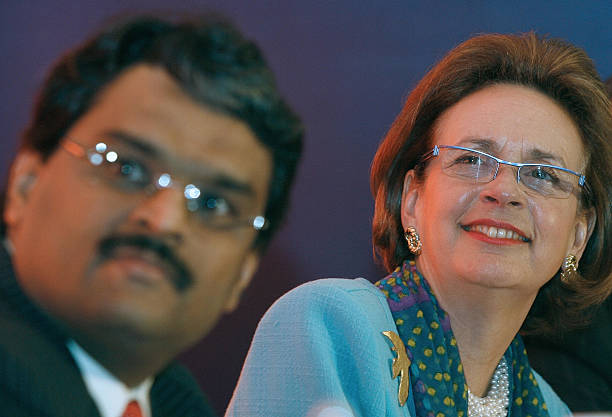
Jignesh Shah is often discussed in the context of India’s shift toward modern, technology-driven financial systems. His work is associated with the development of electronic exchanges and trading platforms that helped reshape how financial markets operate in India.
This transformation did not happen overnight. It was part of a larger movement where markets were becoming faster, more complex, and increasingly dependent on technology. Traditional manual systems were no longer enough, and a new digital structure was needed to support growth and efficiency.
The Need for Modern Financial Market Systems
Before electronic trading became common, financial markets in India relied heavily on manual processes. This created challenges such as slower execution, limited transparency, and restricted participation.
As trading volumes increased, it became clear that a more structured and technology-based system was necessary. The focus gradually shifted toward building platforms that could handle real-time transactions and provide better visibility to market participants.
Building Organized Commodity Markets
A major milestone in this journey was the development of MCX (Multi Commodity Exchange of India). MCX played an important role in organizing India’s commodity trading into a structured electronic system.
Earlier, commodity markets were fragmented and lacked standardization. Pricing was often inconsistent, and access was limited. With the introduction of an electronic exchange, trading became more transparent and efficient.
Real-time price discovery allowed participants to make better decisions. Businesses, traders, and institutions could now engage in a more reliable and structured environment. Over time, this also improved risk management practices and strengthened the overall commodities ecosystem in India.
Early Steps in Financial Technology Development
Another key part of this transformation came through Financial Technologies (India) Limited. This organization played an important role in introducing electronic trading systems in India when digital financial infrastructure was still in its early stages.
The focus was on replacing manual processes with automated systems that could handle large-scale trading operations. These systems improved speed, reduced errors, and brought greater transparency to financial transactions.
This phase marked the beginning of a more modern approach to financial market design in India.
Evolution into a Global Technology Platform
As the organization evolved, it became 63 Moons Technologies. This stage represented a broader expansion of financial technology solutions beyond India.
The company developed advanced platforms for trading, clearing, and settlement that were capable of supporting multiple asset classes. These systems were designed to handle high transaction volumes while maintaining stability and performance.
Over time, these solutions were adopted in several international markets, showing the global relevance of the technology.
A Shift Toward Integrated Market Infrastructure
One of the key ideas behind this entire journey was the creation of integrated financial systems. Instead of treating exchanges as separate components, the focus was on building connected ecosystems where trading, clearing, and settlement work together smoothly.
This helped improve operational efficiency and reduced delays in financial processes. It also created a more organized and structured market environment.
Improving Transparency and Participation
One of the most important outcomes of electronic trading systems was improved transparency. Market participants gained access to real-time data, which helped them make more informed decisions.
This reduced information gaps and created a more balanced and fair trading environment. As markets became more accessible, participation also increased from different segments, including institutions and businesses.
Improved transparency also supported better regulatory oversight, strengthening the overall financial system.
Global Impact of Indian Financial Technology
The technology developed during this phase was not limited to India. It was also implemented in international markets, demonstrating its scalability and reliability.
This global adoption highlighted India’s growing capabilities in financial technology and exchange infrastructure. It also showed that systems built in India could meet global standards and support complex financial operations.
Conclusion
The journey associated with Jignesh Shah reflects a major transformation in India’s financial ecosystem. Through developments linked with MCX (Multi Commodity Exchange of India), Financial Technologies (India) Limited, and 63 Moons Technologies, the financial market structure in India moved toward a more modern and technology-driven model.
This shift improved speed, transparency, and efficiency, helping build a stronger and more accessible financial system that continues to evolve today.